About
I’m interested in how people move through digital environments. Where they start, what draws them forward, where they get stuck, what makes them stay.
I’m Liam Marshall, a software engineer working across UX, front-end development, CMS engineering and analytics. The common thread in my work is human-computer interaction: understanding how people use the systems around them, then making those systems easier to navigate.
Career so far #
| Role | Where | Work and results |
|---|---|---|
| Software engineer | My own projects | MotifSpec, its MCP server and release pipeline, Pinned planet |
| Web developer | Ara Institute of Canterbury | Measurement under consent, Enrolment funnel reporting in GA4, The slider that moved one subject at a time |
| Architectural technician | Steve Inwood Builders | Bespoke house plans in Archicad, from clients’ requirements |
| Computer science student | University of Canterbury | Bachelor of Science in Computer Science |
| Minecraft server | Teens to early twenties | Where the interest started |
The rest of this page is that path in more detail, starting at the beginning.
Designing digital worlds #
From my teens into my early twenties, I ran a Minecraft server. I became interested in how players moved from the starting area into the wider world: which touchpoints helped them find their way, where they ran into barriers, what kept them engaged, and what made them come back.
I didn’t have the vocabulary for user journeys, interaction design or retention at the time, but I was already interested in how the design of an environment shaped people’s behaviour within it.
From physical spaces to interfaces #
I studied computer science at the University of Canterbury and later worked as an architectural technician, translating clients’ requirements into plans for bespoke homes.
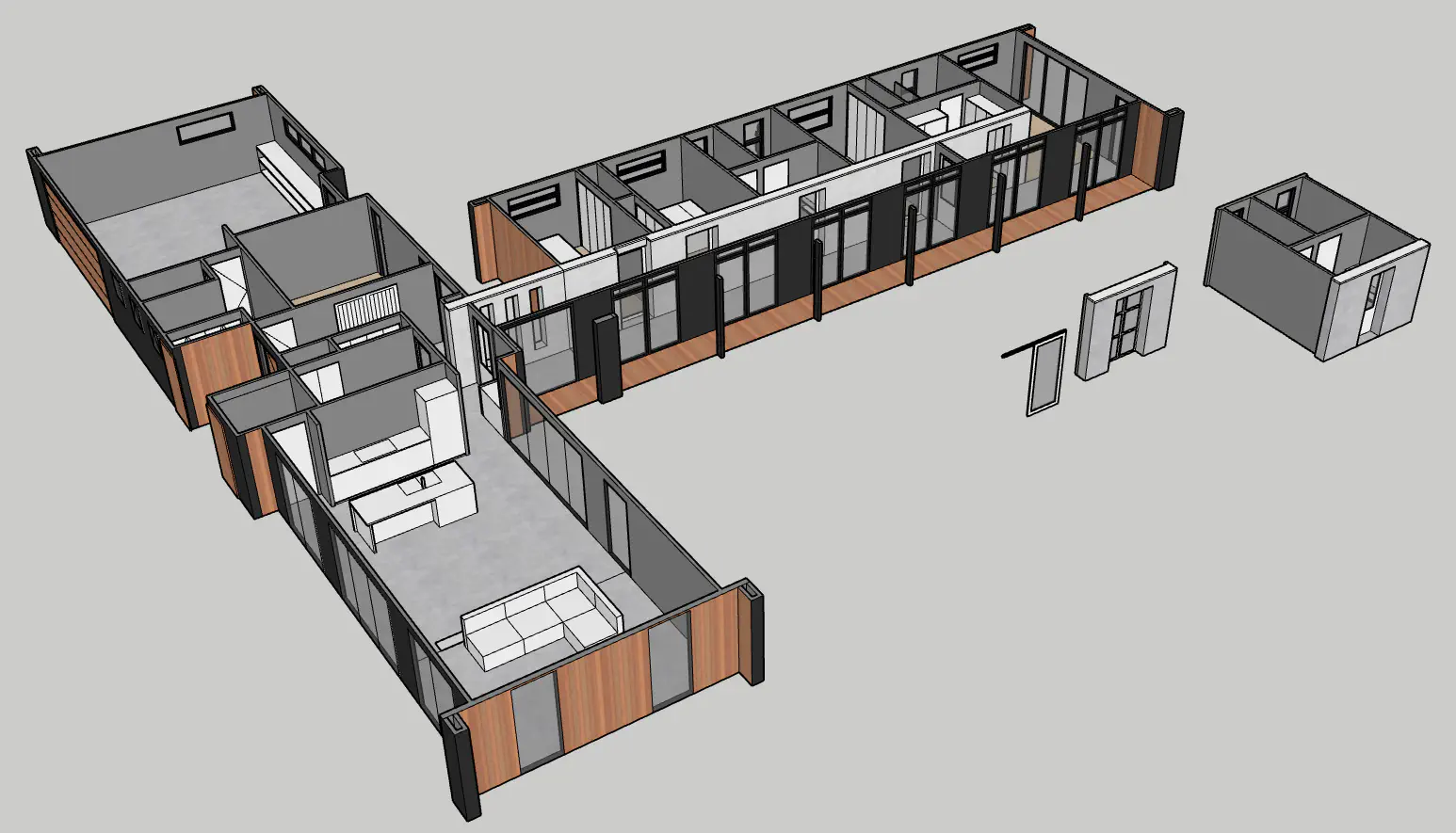
That work developed another side of the same interest. Designing a space means thinking about its structure, the constraints around it, and how someone will actually use it. The details matter, but so does the experience of moving through the whole thing.
Today, I apply that thinking to digital products.
Building for people #
At Ara Institute of Canterbury, I worked across a large institutional website and its student app. My work spanned CMS development, course discovery, navigation, analytics, consent and website quality.
I built reusable CMS components, led a cross-team improvement to programme location search, and redesigned the student app’s navigation to make hard-to-find content easier to reach. I also implemented analytics tracking and reporting, introduced behavioural analytics, and developed a region-aware consent layer with fail-safe behaviour.
I enjoyed working across these boundaries: from the way an interface was organised to the data, code and integrations underneath it.
What I work on now #
I build applications and the systems behind them, designed around the people who use them. This site is built from MotifSpec, my own design system, so every page here is also a test of it. You can see the rest of my work in Work, and read about how I approach it in Writing.
My code is on GitHub.